Food System and Cuisine
The food system and cuisine of the Mariupol Greeks have been described in several 19th-century publications by authors such as A. Attarinov, M. Zemtsov, G. Titov, P. Porokhov, A. Skalkovsky, V. Kondaraki, S. Markov, and others. Researchers like S. Arabadzhy, M. Aradzhyoni, T. Bogaditsa, Y. Ivanova, I. Ponomaryova, and A. Novik have explored the daily and ritual dishes and beverages of the Mariupol Greeks, as well as their overall food system. Field research confirms that the core of the Mariupol Greek cuisine has preserved a variety of dishes that were common in Crimea, some of which can also be found in the cultures of Crimean Tatars, Armenians, Karaites, and Krymchaks. At the same time, the traditional cuisine of the Mariupol Greeks differs significantly from that of the Pontic Greeks and the Greeks from modern-day Greece.
An attempt to generalize and classify the Mariupol Greek cuisine was made by Y. V. Ivanova in her publications from 1988 and 2004. In her opinion, by the early 20th century, the Mariupol Greek diet was predominantly meat- and dairy-based. However, the presence of numerous bread products and agricultural rituals in their culture indicates that plant-based foods played a significant role in the Greeks’ diet in the past. Due to cultural influences from neighbors, changes in economic activities, the introduction of new kitchen utensils, and the shift to modern ovens and stoves, along with the introduction of new ingredients and preservation methods, the recipes and preparation methods of traditional Greek dishes, as well as their consumption, have undergone significant transformations. Some of the dishes described in the 19th century are now considered lost.
The spread of “Soviet cuisine” traditions in everyday meals and the overall food system led to a certain unification of the Mariupol Greeks’ cuisine with that of their closest neighbors—Ukrainians, Russians, and others. Close contact with the population of mainland Greece over the past 30 years has introduced some dishes from modern Greek cuisine that were not previously characteristic of their culture. Today, the ethnic distinctiveness of the Mariupol Greeks’ cuisine is most evident in ritual and festive dishes.
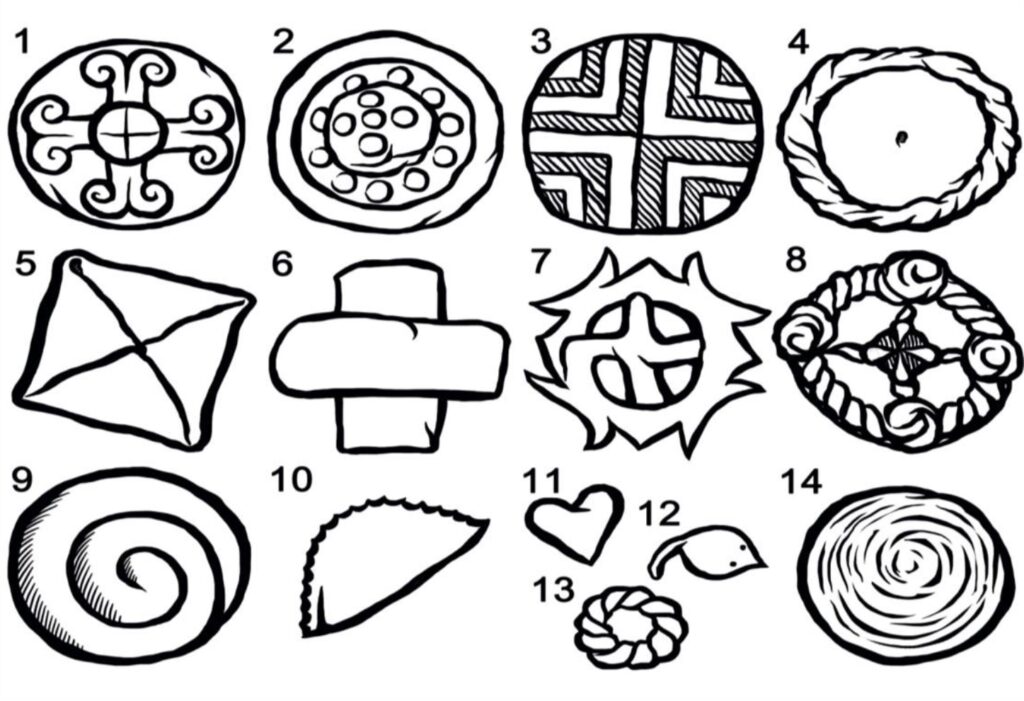
At the beginning of the 20th century, the cuisine of the Mariupol Greeks prominently featured dishes made from grains, flour, meat, and dairy products. Common ingredients included unleavened and flaky dough, which was boiled (e.g., salma, trefty, tutmach, akhchachik), fried (e.g., khatmer, shilter/ chylteria, meze, khatlama), or baked into small loaves (pita, pte) and a variety of pies with fillings such as meat and pumpkin (shmush/shumush and burma). One of the most popular pies was kubete/kubite/kobete (see No. 4 in the image), and the most famous dish was chyr-chyr/chebureks (see No. 10 in the image) . Other common foods included small dumplings, khashikhya or amurdolma, which were boiled or fried.
The most popular meat-based soup was shurpa/churba/surpa, along with soups thickened with grains or flour-based ingredients, such as sprycha—a chicken broth noodle soup traditionally made for new mothers. Lamb and beef were often preserved as salted meat, while fried meat dishes such as kaurma/kaverma were stored by covering them with fat to preserve them for extended periods. Dairy products from cow’s milk included cheese, sour milk (ksigalo or khatikh), homemade baked yogurt (aryan), and cottage cheese. A fermented drink called buza was made from millet or millet flour. As a substitute for sugar, the Mariupol Greeks used honey and a boiled fruit syrup known as bekmez/betmez.
Among ritual dishes, the best-known are the wedding dish haymak/kaymak made from milk, and kol’vo, a memorial wheat dish, or halva made from flour. During festive occasions, a wide variety of ritual breads and cookies were baked, including halats (No. 13), hurube (No. 11), artu (No. 8), stavros (No. 6), pendiki/schan (No. 12), christupsom (No. 1), pouliki, psathir/psatir/psaltir (No. 7), fulto (No. 9),and akhchapite/vasylopita (No. 3)
Margaryta Aradzhyoni
The illustration, a reconstruction by Margaryta Aradzhyoni based on field research materials, was created by artist D. Prokhorov.
Bibliography on the Topic:
Анторинов Ак. Домашний быт мариупольских греков // Московские Университетские Известия.- 1868.- Т.4.- С.333-340.
Арабаджи С.С. Повсякденне життя грекині Приазов’я в наприкінці ХІХ – на початку ХХ ст.// Ґілея (науковий вісник): Збірник наукових праць / Гол. ред. В.М. Вашкевич. – К., 2009. – Спецвипуск до 60-річчя К. В. Балабанова. – С. 78-84.
Арабаджи С. С. Споживання алкогольних напоїв в повсякденному житті греків Маріупольського повіту: джерелознавчий аспект // Вісник Маріупольського державного університету. Серія: Історія. Політологія. – 2021. – Вип. 30. – С. 7-19. Link:https://drive.google.com/file/d/1w_rag2ahRvhu60bAKTf3Sq25do1u8dUw/view?usp=drive_link
Араджионі М. А. Від христопсома до ахчачурека: який обрядовий хліб пекли маріупольські греки на зимові свята // Эллины Украины (Часопис). – 2019. – Грудень. – С.10.
Араджионі М. А. Обрядовий хліб в культурі маріупольських греків // XХ сходознавчі читання А. Кримського. Тези доповідей міжнародної наукової конференції (17–18 червня 2016 р., м. Київ). – К., 2016. – С.30-31.
Араджионі М. А. Обрядовий хліб у весняних святах маріупольських греків // Елліни України. Часопис. 2020. Травень. С. 7. Link: https://docs.google.com/document/d/1dxvb3D9wG24MIW73yc6FKAIKOEcZ7XKx/edit?usp=drive_link&ouid=112491891563837357348&rtpof=true&sd=true
Богадица Т. К. Кухня греков Приазовья. Файмάтя η трофή / Мариупольский краеведческий музей, Музей истории и этнографии греков Приазовья (п. Сартана). – Мариуполь : [б. и.], 2010. – 19 с.
Греки России и Украины / Сост., отв. ред. Ю.В. Иванова. – СПб.: Алетейя, 2004. – 624 с.
Земцов М.Е. Краткий очерк экономического положения населения Мариупольского уезда// Сборник статей Екатеринославского научного общества по изучению края.- Екатеринослав, 1905.- С.1-36.
Казанский К.К. Определение составных частей бузы и положение ее в ряду спиртных напитков. – СПб, 1890. – 70 с. Link:
https://drive.google.com/file/d/1Zu-sgpXdipmLQ5zNP0HJgAkMZ3rt2Hyy/view?usp=drive_link
Кондараки В.Х. Универсальное описание Крыма.- Спб, 1875.- Ч.8.- 127 с.
Ксенофонтова-Петренко О.Н. Семейные обряды в с. Сартана// Культурно-бытовые процессы на Юге Украины.- Москва : Наука, 1979.- С.173-185.
Кухня греків Приазов’я. Стаття в Вікіпедії. Link: https://uk.wikipedia.org/wiki/%D0%9A%D1%83%D1%85%D0%BD%D1%8F_%D0%B3%D1%80%D0%B5%D0%BA%D1%96%D0%B2_%D0%9F%D1%80%D0%B8%D0%B0%D0%B7%D0%BE%D0%B2%27%D1%8F
Марков С.И. Заметки о быте греков г.Мариуполя // Мариуполь и его окрестности.- Мариуполь, 1892.- С. 406-438.
Наулко В.И. Развитие межэтнических связей на Украине.- Киев: Наук. думка, 1975.- 276 с.
Новик А. А. Греческие коллекции в собрании МАЭ – источник по традиционной культуре мариупольских греков // Культурное наследие народов Европы. Сборник Музея антропологии и этнографии им. Петра Великого (Кунсткамера) РАН. – LVII. – Санкт Петербург: Наука, 2011. – С. 243-288. Link:
https://drive.google.com/file/d/1Pr2AjrtDMucIYnygyQmVnDQOXwWegtOE/view?usp=drive_link
Новик А. А. Сохранение традиционной кухни в греческих поселениях Приазовья. По итогам экспедиций 2001–2003 гг. // XXXIII Международная филологическая конференция. Санкт-Петербург, 2–20 марта 2004 г. Вып. 26. Балканские исследования. Ч. 2 / Отв. ред. А. Ю. Русаков. – СПб., 2005. – С. 22–24.
Новик А. А. Традиционная культура и традиционная кухня мариупольских греков. Материалы экспедиций СПбГУ 2001–2004 гг. // Проблемы славяноведения: Сборник научных статей и материалов. Вып. 7 / Отв. ред. С. И. Михальченко. – Брянск, 2005. – С. 342–360.
Новик А. А. Традиционная культура мариупольских греков. Предварительные итоги экспедиции 2001 г. // Материалы конференции, посвященной 90-летию со дня рождения члена-корреспондента РАН А. В. Десницкой / Отв. ред. член-корр. РАН Н. Н. Казанский. – СПб., 2002. – С. 164–166.
Пономарьова І. С. Посуд греків Приазов’я в аспекті трансформації традиційної культури // Східний Світ. – 2007. – №1. – С.53-58.
Пономарьова І. С. Витоки кулінарних традицій надазовських греків // Феномен культури постглобалізму: зб. мат. І Міжнар. наук.-практ. конф., м. Маріуполь, 27 листопада 2020 р.: у 2 ч. / Маріуп. держ. ун-т; гол. ред. Ю.С. Сабадаш; упоряд. С. Янковський; техн. ред. О.В. Дейниченко. – Маріуполь: МДУ, 2020. – Ч. І. – С. 224-226.
Пономарьова І. Збереження традицій приготування їжі у греків Приазов’я // Народна творчість та етнологія. – Київ, 2015. – № 5. – С.58-71.
Пономарьова І. С. Етнокультурні контакти греків Приазов’я (на прикладі традиційної грецької кухні) // Схід. – 2004. – № 3 (61). – С. 65–67.
Пономарьова І. С. Традиційна їжа греків Приазов’я як результат етнокультурних контактів з тюркськими народами // VІІІ Сходознавчі читання А. Кримського : тези доп. міжнар. наук. конф., 2–3 черв. 2004 р. – К., 2004. – С. 85–87.
Порохов М. О. О состоянии скотоводства в Мариупольском округе // Записки общества сельского хозяйства Южной России. – 1848. – № 7. – С. 423–436; № 9. – С. 589–600.
Приазовські греки готують найсмачніші чебуреки. Відеосюжет каналу «Україна». Link: https://www.youtube.com/watch?v=uj0VKnGo3AE&ab_channel=%D0%A1%D0%B5%D0%B9%D1%87%D0%B0%D1%81
Романцов В. Старый Крым: история и современность. Историко-этнографическое исследование / В. Романцов, Г. Наметченюк, С. Арабаджи. – Мариуполь: ПАО «ММК имени Ильича», 2010. – 328 с.
Титов Г. Письма из Екатеринослава. – Одесса: Типография Брауна и К., 1849. – 167 с.
Шевченко В. Спроба описати й витулмачити двоє весняних хлiборобських свят марiупiльських грекiв // Етнографiчний вiсник.- 1930.- Кн.9.- С.111-126.