The traditional clothing
The description and study of the origins of the traditional costume of the Mariupol Greeks was conducted by teachers of zemstvo schools in the Mariupol district, as well as by scholars such as V. Babenko, V. Naulko, Yu. Ivanova, M. Aradzhyoni, I. Ponomaryova, T. Bohaditsa, A. Novyk, L. Liganova, and others.
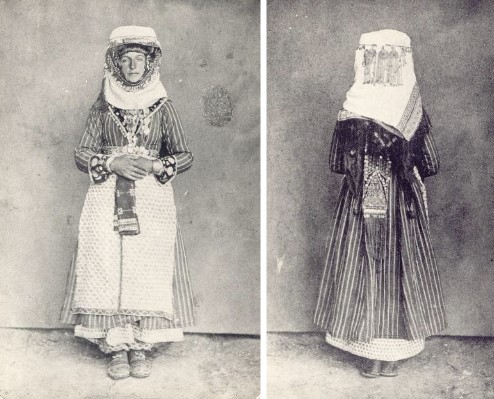
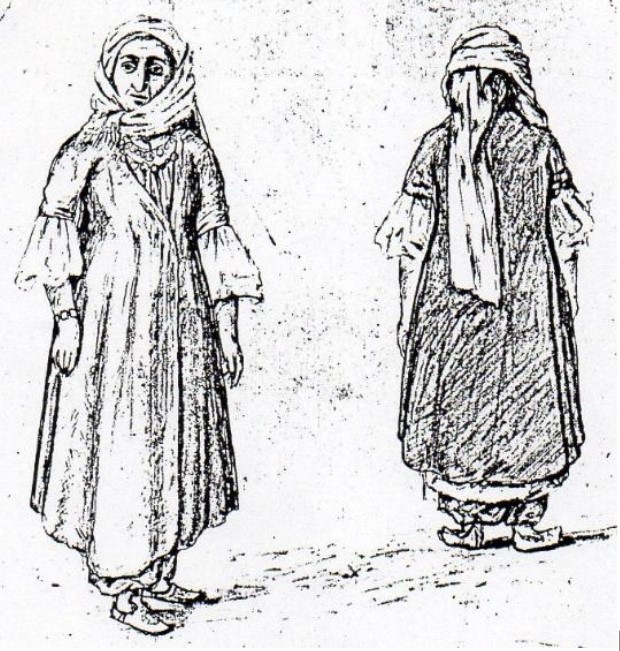
In the late 18th and early 19th centuries, the traditional clothing of the Mariupol Greeks largely followed the so-called Levantine fashion, typical of many Eastern Mediterranean countries under Ottoman rule. However, researchers note that the basic tunic-style shirts worn by both men and women can be traced back to the traditional attire of Greeks from the Byzantine era. The wide hem of men’s shirts was considered by V. Naulko and Yu. Ivanova to be reminiscent of the fustanella, which was common in the Balkans. The cut of lower garments, such as men’s trousers and women’s baggy trousers (shalwars), is thought to reflect influences from Anatolian traditions.
There remains an ongoing debate regarding the cultural influence of the peoples of the Eurasian steppe on certain elements of women’s accessories, such as the periphtar, hair adornments, and the back apron of women’s traditional dress.
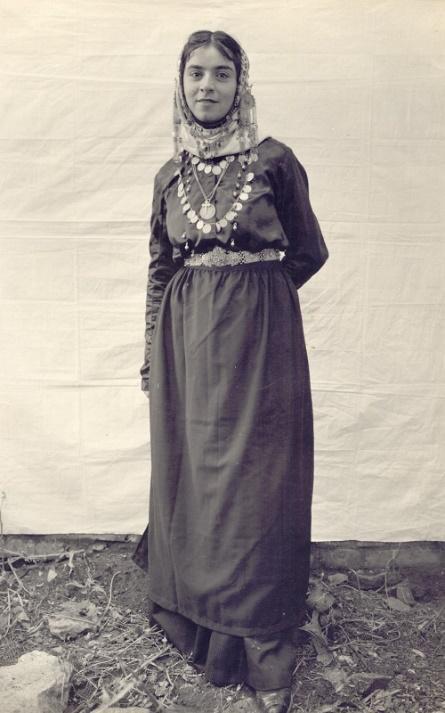
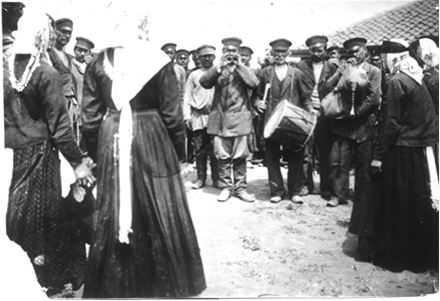
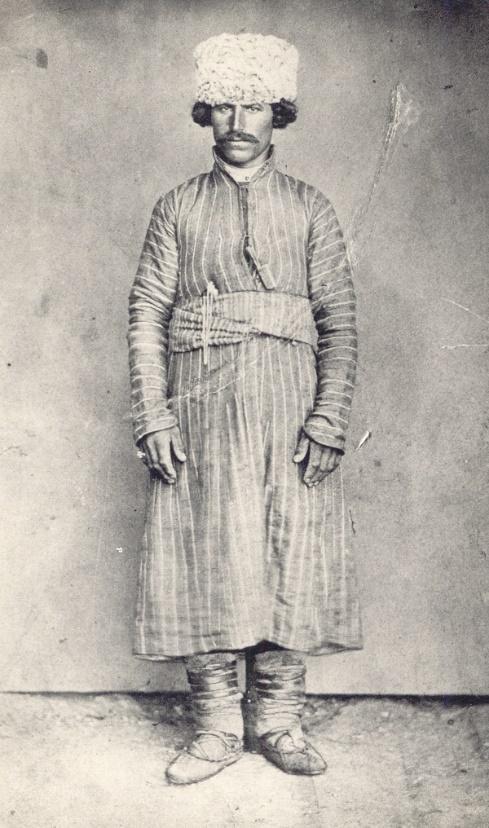
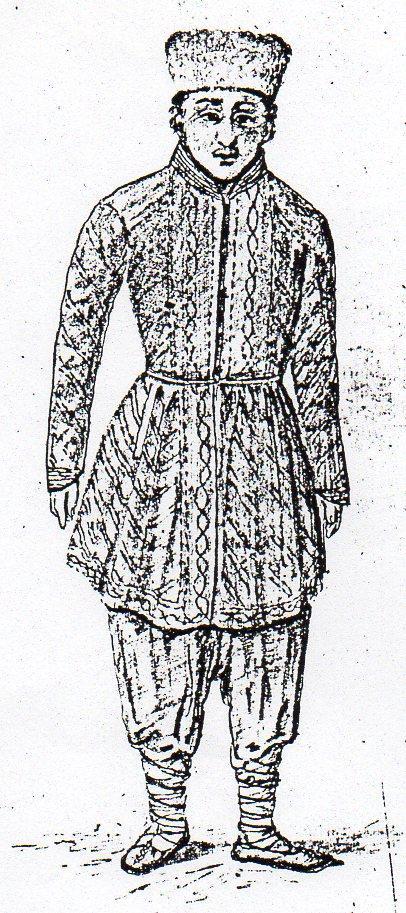
The traditional men’s clothing of the Mariupol Greeks consisted of an undershirt (pukams or kampsu, kolmek), trousers (vrati/shtan, shalvar), a robe-like garment made of colorful felt called sham, a wide belt (zunar, khushakh), a wool hat made of sheep’s wool called kalpakh, and leather shoes called charukhi with socks (kaltsis, chorab). Women’s clothing, especially festive attire, was more complex. Over the shirt (kampsu, kelek) and long underpants (shalvar, tman), women wore a dress (fistan, urba) or a waist-fitted open garment (zupun, sham), which was belted with a narrow, ornate belt called holan with large metal plaques and a woven apron (mandil, bishchir/peshkir, ugluk). The head was wrapped in a headscarf (periphtar, bash yavlukh) along with a complex arrangement of metal jewelry. The chest was adorned with a triangular embroidered velvet piece and necklaces (znisha, khantazh, bonzhakh), while the arms were decorated with embroidered gold cuffs called kopakh, bracelets (vrashol, blezlik), rings (dakhli, dzhizyuk), and a wedding ring (simadko). It should be noted there are a geat variety of names for individual costume elements, associated with the linguistic and dialectal diversity of the Mariupol Greeks, so the provided list of terms is not exhaustive.
By the mid-19th to early 20th century, the traditional outer and festive clothing of the Greeks, which still followed Crimean traditions, began to change significantly. The Mariupol Greeks started preferring more modern, urban, factory-made clothing. Of all the old elements of traditional attire, the leather shoes called charukhy remained in use the longest, and can still be seen in the Nadazov region today. In various more modern forms, the women’s headscarf periphtar can still be seen at folk festivals. Local folklore groups now aim to revive this and other elements of traditional costumes.
Margaryta Aradzhyoni